

Call Us at (866) 824-2613


Click on the picture above to view a demonstration of spinal decompression.  

Related Links:

MEDX

               VAX D 
       SPINEUNIVERSE
           WEB MD


Hours of Operation: Monday-Friday
8 a.m.–6 p.m.

       Auto and Work Injuries           Most Insurance Accepted

Blue Cross Blue Shield (BCBS)
Cigna
Aetna
Humana
Veterans Administration (VA)
United Healthcare
Lifewise
Work Comp
Workers Compensation


This Office Services Patients In The Following Areas:

Scottsdale, Phoenix, Cave Creek, Carefree,Paradise Valley, Fountain Hills, Anthem, Glendale, Peoria, Tempe, Mesa, Gilbert, Apache Junction, Buckeye, Goodyear, Queen Creek, Litchfield Park, Black Canyon City, Prescott, Mayer, Cottonwood, Chino Valley, Payson, Flagstaff, Sedona, Wickenburg, El Mirage, Surprise, Spring Valley, AZ, 85022 


Spinal Conditions successfully treated with the Spinedex Back System 
(spine decompression and exercise)

Our Back System includes VAX-D and MEDX therapies which have more published research than any other non-surgical spinal procedure.  Our Spinedex Back System has 51 peer reviewed research articles published in medical journals. 


Disc Anatomy

In order to understand disc diseases, you must first understand what a disc is and how it functions in the body.  Discs are located between all of the vertebrae, or bones, of the spine from the base of your skull to the sacrum, or bottom of your low back.  The disc functions as a cushion between the bones to absorb the shock and stress associated with everyday movements and activities.


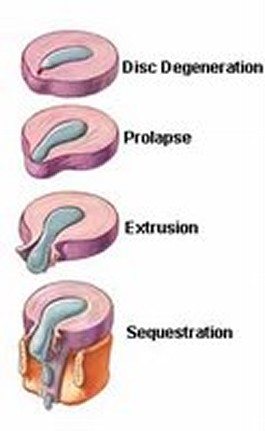
Intervertebral discs are comprised of two main parts, the annulus fibrosus and the nucleus pulposus.  The annulus fibrosus is  the tough, outer-most part of the disc that is composed of criss-crossed fibrous tissue links that form rings that contain the gel-like inner portion of the disc, which is called the nucleus pulposus.  As we perform different activities the pressure inside the disc increases and places pressures on the outer fibers.  Over time, these increased pressures can weaken the structure of the discs leading to disc injury or disease.


Some of the conditions treated with the Spinedex Back System

  • Cervical Radiculopathy
  • Degenerative Disc Disease
  • Facet Syndrome
  • Herniated Discs/Slipped Disc
  • Lumbar Radiculopathy
  • Spinal Stenosis
  • Spondylolisthesis
  • Neck Pain
  • Back Pain
  • Sciatica (Leg Pain)
  • Bulging Discs (Disc Bulge)